


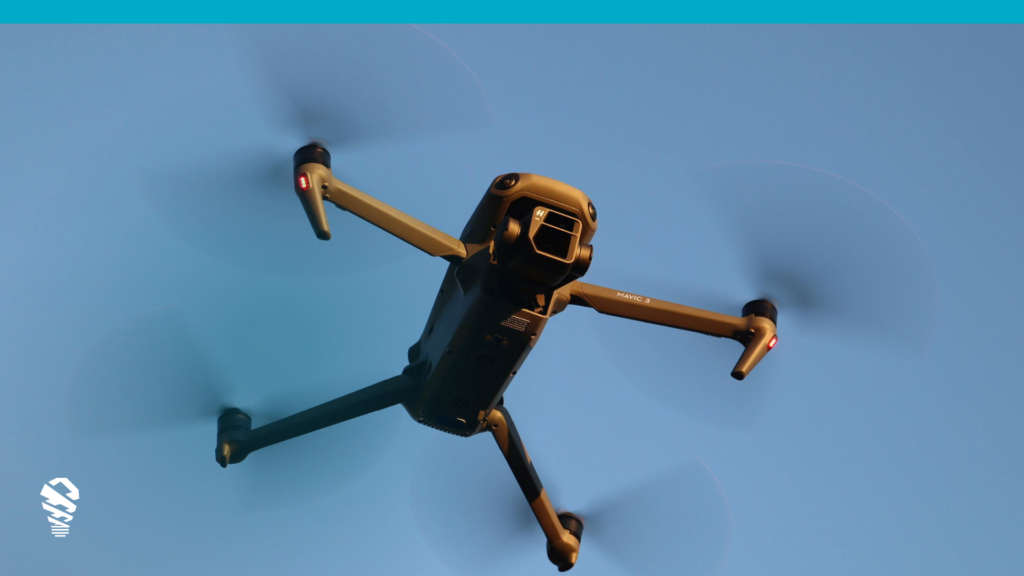
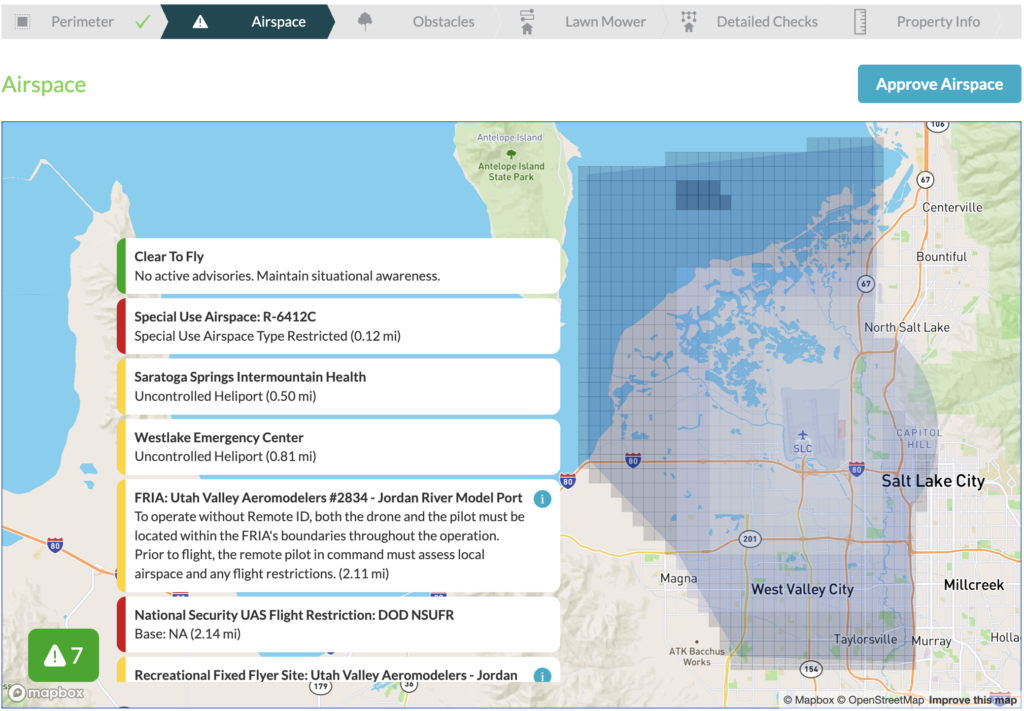
IMGING helps operators stay compliant with FAA airspace regulations by alerting you when a flight location falls within controlled or restricted airspace and whether LAANC authorization is required before takeoff.
So what happens if IMGING gives you a notification like this? It means your flight location may require approval before you can legally fly. Here’s what you need to know next.
Flying a drone isn’t complicated.
What is complicated is understanding when you’re allowed to fly, when you need permission, and what rules you still have to follow once you’re in the air.
Most of the confusion comes from mixing two things together:
- Airspace rules (where you can fly)
- Operational rules (how you can fly)
If you separate those, everything starts to make sense.
Start Here: Airspace Determines Permission
In the U.S., the Federal Aviation Administration (FAA) controls all airspace.
For drone operators, there are really two categories that matter:
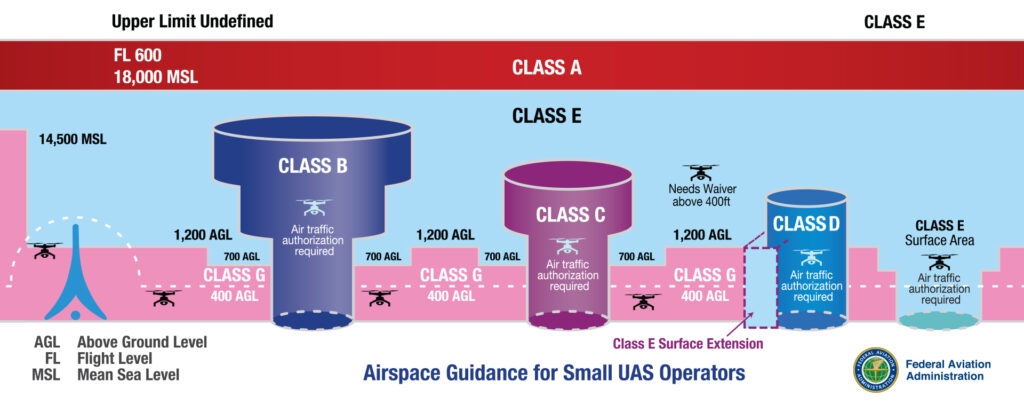
1. Controlled Airspace → You Need Permission
This includes:
- Class B (major cities)
- Class C (mid-size airports)
- Class D (smaller airports)
- Portions of Class E
These are areas where air traffic control is actively managing aircraft.
If you’re flying here, permission is not optional. You need authorization before takeoff.
Most approvals happen through the Low Altitude Authorization and Notification Capability (LAANC) system. In many cases, approval is instant—as long as you stay within altitude limits.
What this looks like in real life:
- Suburban neighborhoods near airports
- Urban inspection jobs
- Anywhere inside a mapped grid around an airport
The closer you are to an airport, the more restricted you are. Some areas allow limited altitude. Others allow none.
2. Uncontrolled Airspace (Class G) → Your “Go-To Zone”
This is where most drone operators prefer to work.
Class G airspace typically covers:
- Rural areas
- Low-traffic zones
- Areas without active air traffic control
Here, you generally do not need prior FAA authorization to fly.
That’s why it’s often referred to as the “go-to zone” for drone operations.
But this is where people make a mistake.
No permission required does not mean no rules.
Even Without Permission, You Still Have to Follow the Rules
Whether you’re in controlled or uncontrolled airspace, you still have to follow FAA operational requirements under Part 107 (for commercial use).
At a minimum, that means:
- Stay at or below 400 feet (with some flexibility near structures)
- Maintain visual line of sight at all times
- Yield to manned aircraft
- Do not fly over people who aren’t part of the operation
These rules don’t change based on airspace.
They apply everywhere.
Airports Are the #1 Trigger for Permission
If you take one thing away from this, it’s this:
*If you’re near an airport, assume you need authorization.
Controlled airspace exists because aircraft are actively operating in that area.
That includes:
- Commercial jets
- Helicopters
- Emergency aircraft
Even if you don’t see them, they’re there.
That’s why authorization is required before you fly.
What About DJI “Red Zones”?
Even if you have FAA authorization through LAANC, your drone may still prevent takeoff because of DJI’s built-in geofencing system.
This is especially common near airports and other sensitive areas.
In many cases, operators need to complete an additional DJI unlocking process before flight.
Watch how to unlock a DJI drone in a red zone below:
Situations Where You Cannot Fly (Regardless of Airspace)
There are times when airspace classification doesn’t matter. You simply cannot fly.
Temporary Flight Restrictions (TFRs)
These override everything.
They are commonly issued for:
- Wildfires
- Disaster response
- Large public events
- VIP travel
Flying in a TFR without authorization can shut down emergency response operations. It’s taken seriously.
2. Emergency Response Situations
Even without a formal TFR, you cannot interfere with:
- Fire crews
- Law enforcement
- Medical helicopters
This comes up frequently in storm response and insurance work.
3. Sensitive or Restricted Areas
Certain locations are permanently restricted or heavily controlled, including:
- Military bases
- Federal facilities
- Critical infrastructure
Additionally, areas managed by the National Park Service generally prohibit drone use without special permits.
Permission vs. Permits: Not the Same Thing
This is one of the biggest misunderstandings in drone operations.
Permission = Airspace Authorization
This is what you get through LAANC.
It answers:
“Can I fly here?”
Permits / Certification = Legal Authorization to Operate
This answers:
“Am I allowed to be doing this work at all?”
If you’re flying commercially, you must operate under Part 107.
That means:
- Holding a Remote Pilot Certificate
- Following FAA operational rules
- Being responsible for safe flight operations
You may also need permits depending on location:
- City or municipal restrictions
- Private property requirements
- Special-use locations (campuses, parks, events)
The Three Layers Every Drone Operator Must Understand
Every flight comes down to three checks.
Airspace
Can I fly here?
- Controlled → get authorization
- Uncontrolled → usually good to go
Operational Rules (Part 107)
How can I fly?
- Stay under altitude limits
- Maintain visual line of sight
- Avoid flying over people
- Conduct safe operations
Situational Restrictions
Should I fly right now?
- TFRs
- Weather
- Emergency response activity
- Local restrictions
What This Looks Like in the Field
Urban or Suburban Inspections
- Typically in controlled airspace
- May rRequire LAANC authorization
- Must manage proximity to people and structures
Rural Operations
- Often in Class G airspace
- No prior authorization required
- Faster deployment
Catastrophe Response
- High likelihood of TFRs
- Active emergency operations
- Airspace may be temporarily restricted
Roofing and Solar Inspections
- Airspace approval is often the first step
- Operational rules (line of sight, people nearby) become the limiting factor
What Can Go Wrong?
The same mistakes show up again and again:
- Assuming rural = no rules
- Flying near airports without authorization
- Losing visual line of sight during inspections
- Flying over bystanders or neighboring properties
- Skipping pre-flight checks
Most violations aren’t intentional. They come from misunderstanding how these rules work together.
An Easy Way to Think About It
Before every flight, ask three questions:
- Am I in controlled airspace?
→ If yes, get authorization
- Am I following Part 107 rules?
→ If not, don’t fly
- Is anything happening that overrides this?
→ TFR, emergency, restricted area
If all three check out, you’re good to go.
Let’s Sum it Up
Drone regulations aren’t designed to slow you down. They’re designed to make sure your operation can scale safely alongside manned aviation, emergency response, and increasingly complex airspace. The operators who understand this avoid risk, and build workflows for their specific conditions.
Get connected with our team:




